
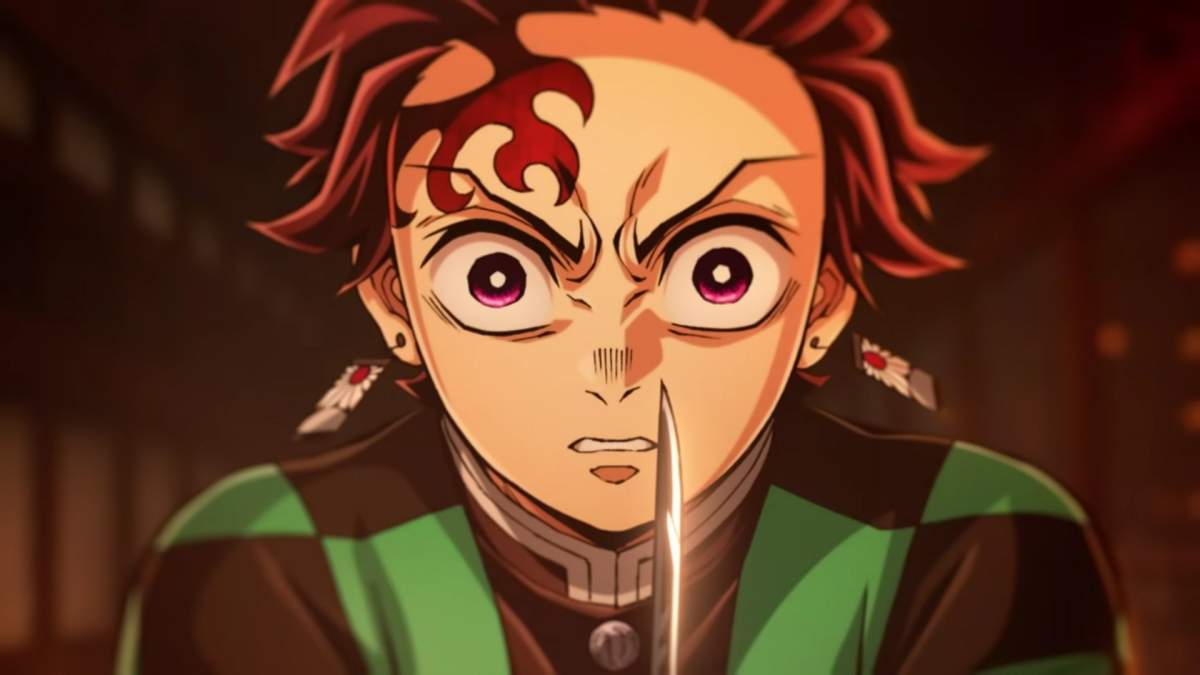
Demon Slayer: Kimetsu no Yaiba – The Movie: Infinity Castle (2025) takes Tanjiro Kamado and the Demon Slayer Corps into their most dangerous battle yet, turning Muzan Kibutsuji’s mysterious fortress into a terrifying battlefield where every victory comes with a devastating price. After years of training, heartbreaking losses, and increasingly powerful enemies, Tanjiro finally enters the conflict that could determine the future of both humans and demons. However, the Infinity Castle is not simply another place filled with powerful opponents. It is a constantly shifting labyrinth controlled by the demons, designed to separate the Demon Slayers and force them into desperate one-on-one confrontations.
The film’s ending delivers several major turning points, including Zenitsu Agatsuma’s confrontation with his former fellow student Kaigaku, Shinobu Kocho’s tragic encounter with Upper Rank Two Doma, and the emotional final battle between Tanjiro, Giyu Tomioka, and Upper Rank Three Akaza. Each confrontation explores a different kind of strength: the courage to face personal betrayal, the willingness to sacrifice everything for revenge, and the ability to recognize the humanity that a demon has tried to bury.
But the biggest question remains unanswered: Does Tanjiro defeat Akaza and finally find Muzan? The answer is complicated. Tanjiro and Giyu overcome Akaza, and the demon’s tragic human past ultimately brings his story to an end. Yet Muzan remains alive, and the Demon Slayer Corps is still trapped inside the enemy’s stronghold. Rather than delivering the final victory fans might expect, the movie closes with the consequences of its battles setting up the next chapter of the trilogy.
Directed by Haruo Sotozaki and animated by ufotable, Infinity Castle is the first film in the planned cinematic trilogy adapting the concluding portion of Koyoharu Gotouge’s manga. Its ending is therefore designed to resolve important character conflicts while keeping the larger war against Muzan unfinished. To understand what the final scenes mean, we need to look at how the battles unfold, why Akaza finally stops fighting, what happens to Shinobu, and why Tanjiro’s greatest enemy remains beyond his reach.
You May Also Like

Why Does Muzan Send Tanjiro and the Hashira Into the Infinity Castle?
The story begins immediately after the events of the Hashira Training Arc, when Muzan Kibutsuji appears at the Ubuyashiki residence. The Demon Slayer Corps has spent considerable time preparing for the inevitable confrontation, strengthening its members through demanding physical training and refining the techniques they will need against the Twelve Kizuki. However, Muzan does not allow the Demon Slayers to choose the battlefield. Instead, he draws them into the Infinity Castle, a seemingly endless dimension where ordinary ideas of space, gravity, and direction no longer apply.
The castle is one of the demons’ greatest advantages because its rooms, corridors, staircases, and platforms can shift unpredictably. Its architecture makes it difficult for the Demon Slayers to remain together, coordinate their movements, or reach Muzan directly. The demon Nakime controls this strange environment through her supernatural abilities, turning the fortress into a weapon that can isolate powerful warriors and place them in front of enemies capable of exploiting their weaknesses.
For Tanjiro, entering the castle means moving closer to the enemy responsible for destroying his family and turning his younger sister, Nezuko, into a demon. His personal mission has always been connected to the larger struggle against Muzan, but the battle is no longer just about revenge. Tanjiro wants to protect other people from suffering the same tragedy and find a way to restore Nezuko’s humanity.
The Hashira share that determination, although each carries different memories, losses, and motivations into the conflict. Some want revenge for comrades who died, while others are driven by their duty to protect humanity. The Infinity Castle forces all these motivations into immediate action. Rather than fighting together as one organized force, the Demon Slayers must survive separate encounters while trying to make progress toward Muzan.
This setup is essential to understanding the ending. The film is not structured as one uninterrupted battle between Tanjiro and the Demon King. Instead, it presents several major confrontations whose outcomes gradually change the balance of power. Even when the Demon Slayers win, they lose time, strength, and sometimes their lives. The castle remains dangerous, and Muzan’s location is still the central obstacle that prevents them from achieving a decisive victory.
Zenitsu Faces Kaigaku in a Battle About Betrayal and Self-Respect
One of the film’s most important confrontations involves Zenitsu Agatsuma and Kaigaku, a former fellow student under the same Thunder Breathing teacher, Jigoro Kuwajima. Zenitsu is often portrayed as frightened, emotional, and convinced that he is not strong enough to stand alongside his friends. However, beneath that insecurity is a warrior who has spent years developing one particular Thunder Breathing technique and learning to survive situations that terrify him.
Kaigaku represents the opposite path. Although he possesses considerable talent, he becomes a demon and abandons the principles that once connected him to his teacher and fellow student. His transformation is particularly painful because it reflects a betrayal of their shared training and the trust their master placed in them. The confrontation is therefore more personal than a straightforward fight between two swordsmen. Zenitsu must face someone whose choices have brought shame and suffering to the very tradition they once shared.
Kaigaku underestimates Zenitsu, partly because he remembers him as a weak and frightened student. That judgment becomes a serious mistake. Zenitsu has continued training despite his fear, and he has developed his own technique rather than relying entirely on the forms he originally learned. During their battle, he uses Thunder Breathing, Seventh Form: Honoikazuchi no Kami, a technique he created himself.
The attack allows Zenitsu to defeat Kaigaku, bringing their confrontation to a decisive end. The victory is important because it demonstrates that Zenitsu’s courage does not require him to stop feeling afraid. His growth comes from choosing to fight even when fear is present. He has finally become someone who can take responsibility for his own strength instead of measuring himself against another person’s achievements.
Kaigaku’s defeat also carries a tragic consequence for their former teacher. Jigoro had invested deeply in both students, hoping they would carry on the Thunder Breathing tradition. Kaigaku’s betrayal had already caused immense pain, and Zenitsu’s victory cannot undo what happened. Nevertheless, Zenitsu proves that the values his teacher tried to teach him have survived.
This storyline contributes to the film’s larger message: strength is not simply a matter of natural talent or destructive power. It is also shaped by the choices people make when their character is tested. Zenitsu’s battle resolves his conflict with Kaigaku, but the wider war inside the Infinity Castle continues, leaving other Demon Slayers to face enemies whose abilities are far beyond ordinary human limits.
Shinobu Kocho vs. Doma: The Tragedy Behind Her Final Battle
While Zenitsu faces Kaigaku, Shinobu Kocho encounters Doma, the Upper Rank Two demon responsible for killing her older sister, Kanae Kocho. Shinobu has spent years carrying the pain of that loss, and her cheerful manner often hides the anger and grief she struggles to control. Unlike some of the other Hashira, she does not possess the physical strength needed to decapitate a powerful demon through ordinary swordsmanship. Instead, she has developed a distinctive fighting style built around speed, precise thrusts, and wisteria-based poison.
Doma is an especially disturbing opponent because he appears friendly and relaxed even when committing horrific acts. His pleasant expression conceals a complete lack of genuine empathy, making him difficult to understand through ordinary human emotions. He does not respond to suffering with the remorse or compassion that might cause another person to hesitate. For Shinobu, this makes the battle deeply personal: she is confronting the demon who took away the person she loved most, but she is also facing an enemy whose cruelty cannot easily be challenged through anger alone.
Shinobu attacks with her poisoned blade, attempting to exploit the vulnerability that her specialised techniques create. However, Doma’s demonic abilities and resistance make him extremely difficult to kill. Her attacks cannot immediately produce the result she needs, and the confrontation turns increasingly dangerous. Despite her intelligence and determination, Shinobu cannot simply overpower Doma by striking harder.
The battle ends in tragedy when Doma overwhelms Shinobu and absorbs her. Her death is one of the film’s most devastating moments because it appears to give the demon another victory at the expense of the Demon Slayer Corps. Shinobu’s efforts to avenge Kanae do not result in her personally delivering the final blow, and her loss leaves her allies with another reason to continue fighting.
However, her role in the larger conflict is not meaningless. Shinobu has prepared for the possibility that her physical limitations might prevent her from defeating Doma directly. Her knowledge of poison and her willingness to put herself in danger are connected to a wider plan against the Upper Rank demon. The significance of that strategy extends beyond the immediate scene, although the film does not resolve Doma’s entire storyline.
Shinobu’s fate also changes the emotional direction of the ending. The Demon Slayers are not moving through the castle untouched by their victories. They are losing friends and experienced warriors, and each death increases the burden carried by those who remain. Her confrontation with Doma reinforces one of the film’s central ideas: defeating the demons will demand more than individual bravery, because even the strongest fighters sometimes have to make sacrifices that they cannot survive.
Tanjiro and Giyu Meet Akaza: The Return of a Dangerous Enemy
Tanjiro’s most important battle begins when he and Giyu Tomioka encounter Akaza, the Upper Rank Three demon who killed Kyojuro Rengoku in Demon Slayer: Mugen Train. Akaza is not a new enemy whose abilities Tanjiro must discover from the beginning. His earlier encounter with Rengoku left a lasting wound on the Demon Slayer Corps, particularly because the Flame Hashira fought desperately to protect the passengers and his companions.
For Tanjiro, Akaza represents a direct connection to that painful loss. He remembers Rengoku’s courage and the sacrifice he made, and facing the same demon creates an understandable desire to defeat the enemy who caused his death. Yet Akaza is considerably more powerful than an ordinary demon. His combat experience, speed, regeneration, and martial arts make him one of the most formidable opponents in the Infinity Castle.
Giyu’s presence is crucial because Tanjiro cannot reasonably expect to win through determination alone. As the Water Hashira, Giyu possesses extraordinary swordsmanship and experience fighting powerful demons. The two warriors combine their abilities, but Akaza’s strength makes the confrontation increasingly desperate. He can adapt to his opponents’ movements, exploit openings, and continue fighting despite injuries that would incapacitate a human.
Akaza’s Compass Needle is particularly dangerous. Through this ability, he can detect an opponent’s fighting spirit and use it to anticipate attacks. The more forcefully an enemy projects the intention to fight, the more effectively Akaza can respond. This means that Tanjiro’s anger and determination, although understandable, can also become advantages for the demon.
As the battle continues, both Tanjiro and Giyu are pushed toward their limits. Their swords and physical endurance become critical factors, and there are moments when Akaza appears capable of overwhelming them. Giyu suffers severe injuries, and Tanjiro must look beyond the techniques he has already mastered if he hopes to survive.
The confrontation eventually becomes a test of perception and emotional control rather than strength alone. Tanjiro needs to understand how Akaza reads his opponents and discover a way to move beyond that advantage. His memories of earlier training and the example set by his father help him recognise that a different state of awareness may offer the opening he needs.
This is what makes the battle more meaningful than a simple rematch. Tanjiro is not merely trying to prove that he has become stronger since the events of Mugen Train. He is learning how to approach a seemingly unbeatable opponent without allowing anger, fear, or the desire for revenge to control every movement.
How Does Tanjiro Defeat Akaza? The Transparent World and Selfless State Explained
Tanjiro’s breakthrough comes when he reaches a level of awareness associated with the Transparent World and the Selfless State. These concepts represent different but complementary aspects of combat. The Transparent World allows a fighter to perceive an opponent’s body with extraordinary clarity, making movements and physical changes easier to anticipate. The Selfless State, meanwhile, involves suppressing the fighting spirit that Akaza’s Compass Needle relies on detecting.
Tanjiro’s development is connected to lessons he has gradually absorbed throughout his journey. His father’s movements and breathing provide an important example, while his own experiences against powerful demons have taught him that simply attacking with greater force is not always the answer. He begins to understand that he must control the signals he gives his opponent rather than allow Akaza to read his intentions.
The change is difficult because Tanjiro is fighting someone associated with the death of a beloved mentor. His anger is understandable, but it can interfere with the calm awareness required to overcome Akaza’s ability. Tanjiro must therefore find a way to act without allowing the desire to defeat his opponent to dominate his entire presence.
When he finally creates the opening he needs, Tanjiro moves past Akaza’s usual ability to anticipate his attacks and successfully cuts off the demon’s head. This is a major turning point because decapitation with a Nichirin blade is normally the decisive method for killing a demon. After such a difficult battle, Tanjiro appears to have achieved the victory he has been fighting for.
However, Akaza’s defeat is not immediately straightforward. His regenerative powers are extraordinary, and even after losing his head, his body begins resisting the usual consequences of decapitation. The scene demonstrates just how dangerous the Upper Rank Three demon has become. His determination to fight is so deeply rooted that the physical injury does not instantly bring the confrontation to a complete stop.
Tanjiro’s success is therefore only part of the answer to the question of how Akaza is defeated. He creates the opportunity that allows the demon to be overcome, but the final resolution depends on Akaza confronting memories he has spent years suppressing. The battle shifts from a contest of supernatural abilities to a confrontation with the human identity that existed before he became a demon.
This distinction matters because Tanjiro does not simply overpower every aspect of Akaza’s strength. He breaks through the advantage provided by the Compass Needle and forces the fight into a situation where Akaza’s own memories and choices become decisive. The outcome is both a victory for the Demon Slayer Corps and the tragic conclusion of a character whose humanity has been buried beneath years of violence.
Akaza’s Human Past: Who Was He Before Becoming a Demon?
One of the most emotional parts of the ending is the revelation of Akaza’s former identity as Hakuji. Before becoming one of Muzan’s most powerful demons, he was a human being whose life was shaped by poverty, suffering, and desperate attempts to protect the people he loved. His transformation into Akaza did not erase the experiences that had defined him. Instead, those memories remained buried beneath his demonic existence, influencing his behaviour in ways he could not fully acknowledge.
As a young man, Hakuji lived through severe hardship. His father was seriously ill, and Hakuji resorted to stealing to obtain medicine for him. His actions brought him into conflict with the authorities, and his life became increasingly troubled. After losing his father, Hakuji’s circumstances grew even more painful, leaving him without the family security and direction that might have given him a different future.
His life changed when he encountered Keizo, a martial arts instructor who offered him an opportunity to train and find purpose. Through Keizo, Hakuji met Koyuki, Keizo’s daughter, whose presence gave him a reason to imagine a happier future. Hakuji developed a deep attachment to Koyuki, and the possibility of building a life with her helped him move away from the violence and desperation that had once defined him.
Unfortunately, this happiness did not last. A poisoning incident connected to a rival dojo devastated Hakuji’s life, taking away Keizo and Koyuki. Their deaths destroyed the future he had begun to believe was possible. Overwhelmed by grief and rage, Hakuji responded with extreme violence against those responsible, demonstrating how profoundly the loss had changed him.
Muzan’s intervention eventually transformed Hakuji into a demon. As Akaza, he gained extraordinary strength and regeneration, but he also became trapped in a distorted version of his former identity. His obsession with becoming stronger can be understood through the trauma of his human life: strength had become connected to his inability to protect the people he loved.
During the battle with Tanjiro and Giyu, those buried memories begin returning. The revelation changes how the audience understands Akaza. His strength is no longer merely an impressive obstacle for the heroes to overcome; it is also a reminder of the human being who existed before his transformation.
The film does not excuse the atrocities Akaza committed as a demon. His past cannot undo the lives he took, including the death of Rengoku. Instead, the memories explain why his final moments are so emotionally complicated. Akaza must confront the distance between the man he once wanted to become and the demon he has spent years being.
Why Does Akaza Stop Regenerating and Accept Death?
After Tanjiro cuts off Akaza’s head, the demon’s body continues attempting to regenerate. This is the final obstacle in a battle that has already pushed Tanjiro and Giyu to their limits. Under ordinary circumstances, losing his head should mean the end of Akaza’s life, but his exceptional strength allows him to resist the outcome that would normally follow.
At this point, the battle is no longer determined entirely by Tanjiro’s sword. Akaza’s returning memories force him to confront the human life he abandoned, including his father, Keizo, and Koyuki. The people who once gave his existence meaning return to his consciousness, reminding him of the relationships that were destroyed before he became a demon.
His memories of Koyuki are especially important because she represents the future he once wanted. Before his transformation, Hakuji had the opportunity to leave behind his troubled past and build a life with someone he loved. The poisoning that killed Koyuki and Keizo shattered that possibility, and his subsequent transformation into a demon took him even further from the person he might have become.
As these memories return, Akaza begins to recognise the truth about himself. His endless pursuit of strength has not brought him peace, restored what he lost, or allowed him to escape his suffering. Instead, it has turned him into someone who continues fighting long after the original reason for his desperation has disappeared.
Rather than complete his regeneration and continue attacking Tanjiro and Giyu, Akaza ultimately stops resisting death. His decision brings his life as a demon to an end and resolves the central conflict of his character. Tanjiro and Giyu survive the confrontation, but their victory comes through a combination of combat skill and Akaza’s own final recognition of the person he once was.
This is why the ending of Akaza’s storyline feels different from a conventional action-movie defeat. Tanjiro creates the opening that allows Akaza to be overcome, but the demon’s memories are crucial to the final outcome. Akaza is defeated physically and emotionally, as the human identity he buried finally becomes impossible to ignore.
His death also provides a sense of closure to the tragedy that began with Rengoku’s death. Tanjiro has confronted the demon responsible for killing his mentor, and the threat posed by Upper Rank Three has ended. Nevertheless, the victory is not a complete triumph for the Demon Slayer Corps. Shinobu has already fallen, Tanjiro and Giyu are gravely injured, and Muzan remains the enemy they must eventually face.
Akaza’s final moments reinforce one of the franchise’s most important themes: becoming stronger does not necessarily mean finding happiness or overcoming pain. His life as a demon gave him extraordinary power, but it could not erase his grief. Only when his human memories returned could he finally confront what he had become.
Does Tanjiro Find Muzan at the End of Infinity Castle?
No. Tanjiro does not find and defeat Muzan Kibutsuji by the end of Demon Slayer: Infinity Castle. Although the Demon Slayer Corps enters the Infinity Castle with the goal of ending Muzan’s reign, the fortress separates its fighters and forces them into battles against the Upper Rank demons. Tanjiro’s confrontation with Akaza becomes one of the movie’s major victories, but it does not bring him face-to-face with the final enemy he has been pursuing throughout the series.
Muzan remains alive and continues to pose a threat to the Demon Slayer Corps. The castle’s unusual structure gives the demons a significant tactical advantage, and Nakime’s control over its layout makes reaching a particular destination extremely difficult. Even after Tanjiro and Giyu defeat Akaza, they cannot simply leave the battlefield and move directly toward Muzan.
This unresolved conflict is essential to the movie’s ending. The Demon Slayers have demonstrated that they can defeat some of Muzan’s most powerful subordinates, but the destruction of the Upper Ranks does not automatically destroy their master. Muzan’s survival means that every victory achieved inside the castle is part of a larger struggle rather than the conclusion of the war.
The ending also preserves the central emotional motivation behind Tanjiro’s journey. His desire to protect Nezuko and restore her humanity remains connected to the need to eliminate Muzan, whose actions created the tragedy that began the story. Tanjiro has made extraordinary progress, but the enemy responsible for his family’s suffering remains beyond his reach.
For viewers expecting a final showdown between Tanjiro and Muzan, the movie deliberately withholds that confrontation. The first installment focuses on individual battles, character development, and the sacrifices necessary to reach the final stage of the conflict. Muzan’s continued survival ensures that the story has not yet reached its ultimate resolution.
What Happens to Shinobu, Doma, and the Other Demon Slayers?
The ending leaves the Demon Slayer Corps in a complicated position. Some of its members have secured important victories, but the cost of those victories is devastating. Shinobu’s death is the clearest example of how dangerous the Infinity Castle has become. Her confrontation with Doma ends with her being absorbed by the demon, leaving her allies to continue the fight without her.
Doma, however, is not simply an enemy who has defeated Shinobu and escaped the consequences of the encounter. Shinobu’s poison strategy is connected to the broader effort to weaken him, and her sacrifice has implications for the battle that follows. Kanao Tsuyuri and Inosuke Hashibira become important to the continuing confrontation with Doma, although the first movie does not resolve every aspect of that fight.
Zenitsu’s victory over Kaigaku removes another powerful demon from the battlefield. His achievement demonstrates that the Demon Slayers can still overcome enemies whose supernatural abilities initially seem overwhelming. Yet these victories do not restore the strength the Corps has lost, and the remaining fighters must continue facing powerful opponents in an environment designed to work against them.
Tanjiro and Giyu also emerge from their fight with Akaza in terrible condition. They have survived a confrontation that could easily have killed them, but survival does not mean they are ready to take on another Upper Rank demon immediately. Their injuries emphasise the physical and emotional toll of the conflict.
Meanwhile, other Hashira remain scattered throughout the Infinity Castle. Their separate encounters create the sense that the larger battle is still unfolding beyond the immediate events shown in the main confrontation. The castle remains dangerous, and the Demon Slayers cannot be certain when or where they will encounter their next opponent.
The result is an ending defined by both achievement and loss. Akaza and Kaigaku are defeated, but Shinobu’s death demonstrates the terrible price of confronting Muzan’s forces. The Corps has made meaningful progress, yet its members remain trapped in a battlefield where the next encounter could be even more devastating.
What Does the Final Scene Mean? Muzan’s Survival and the Continuing War
The final stretch of Infinity Castle shifts attention away from the idea of a single decisive victory and toward the continuing struggle inside the fortress. After the major confrontations, the film shows the consequences of the battles and the condition of the Demon Slayers who remain. Tanjiro and Giyu have survived their encounter with Akaza, but they are severely injured, and the Corps has lost Shinobu.
Muzan’s situation is particularly important. The ending reveals him encased in a grotesque cocoon-like mass of flesh and blood, a disturbing image that suggests the Demon King remains a central and dangerous presence even while the other battles have unfolded. Rather than showing Muzan defeated, the movie reinforces the uncertainty surrounding his next move.
The imagery also creates a contrast between the Demon Slayers’ physical vulnerability and Muzan’s continued existence. The heroes have been pushed to the edge of their endurance, while their enemy remains embedded in the very stronghold that separates them. The situation makes clear that defeating individual demons is not enough to guarantee the safety of humanity.
The credits continue the narrative by showing the aftermath of the confrontations and the other Hashira navigating the castle. These moments are significant because they are not merely decorative footage accompanying the music. They extend the film’s closing sequence and reinforce the fact that the battle has not ended.
The movie’s final message is therefore not that Tanjiro has won the war, but that the Demon Slayer Corps has taken important steps toward a final confrontation. Akaza’s defeat closes one major character arc, while the survival of Muzan keeps the central conflict unresolved.
For the audience, the result is a deliberate cliffhanger. The heroes have proved that the Upper Ranks can be defeated, but they have not yet overcome the enemy who commands the demons. The next installment will continue the larger conflict, building on the sacrifices and discoveries established in this film.
Does Demon Slayer: Infinity Castle Have a Post-Credit Scene?
Demon Slayer: Kimetsu no Yaiba – The Movie: Infinity Castle does not have a traditional post-credit scene that plays after all the credits have finished. However, viewers should not assume that the credits contain nothing important. The film uses its credit sequence to continue showing the aftermath of the battles and establish the situation facing the surviving Demon Slayers.
The footage includes the consequences of Shinobu’s confrontation with Doma, the injuries sustained by Tanjiro and Giyu, and the continuing presence of Muzan within the castle. The remaining Hashira are also shown as the conflict continues, reinforcing the fact that the heroes have not escaped the fortress or completed their mission.
These scenes serve a narrative purpose because they bridge the immediate outcomes of the film’s major fights with the unfinished war against Muzan. They make the ending feel less like a final resolution and more like a transition into the next part of the story.
The closing imagery also highlights the importance of unity among the Hashira. After the violence and loss experienced inside the castle, the image of the Hashira together provides an emotional reminder of what the Demon Slayer Corps is fighting to protect. Their shared purpose matters even as the group faces serious losses.
So, if you are watching the film for additional story information, it is worth staying through the credits. There is no separate traditional post-credit scene, but the credit sequence itself contains meaningful narrative material that reinforces the movie’s cliffhanger ending.
Demon Slayer: Infinity Castle Ending Explained: Does Tanjiro Win or Lose?
The ending of Demon Slayer: Infinity Castle is best understood as a partial victory rather than a complete triumph. Tanjiro and Giyu defeat Akaza, and Zenitsu defeats Kaigaku, removing two dangerous demons from Muzan’s forces. These outcomes demonstrate how far the Demon Slayers have progressed and show that the Upper Ranks are not invincible.
However, the victory comes with enormous sacrifices. Shinobu dies during her confrontation with Doma, while Tanjiro and Giyu are left gravely injured after fighting Akaza. Other members of the Demon Slayer Corps remain scattered throughout the Infinity Castle, and their battles have not all reached their conclusions.
Most importantly, Muzan remains alive. Tanjiro does not find and defeat the Demon King in this movie, so the central conflict of the franchise remains unresolved. The Infinity Castle continues to separate the fighters, and the Demon Slayers must survive the next stage of the war before they can achieve their ultimate objective.
Akaza’s death gives the film its most emotionally complete storyline. His return to his human memories reveals the tragedy behind his obsession with strength, and his decision to stop regenerating brings his life as a demon to an end. His fate also provides a measure of closure to the loss of Rengoku, even though that closure comes at a terrible cost.
Ultimately, the movie’s ending is about the difference between winning a battle and winning a war. Tanjiro has overcome one of his most formidable enemies, but he has not eliminated the source of the demons’ existence. The Demon Slayer Corps has made progress, yet it remains vulnerable and far from achieving lasting peace.
That is what makes the ending so effective as the first part of a trilogy. It resolves important personal conflicts without pretending that the larger struggle is finished. Tanjiro’s journey continues, Muzan remains the ultimate target, and the sacrifices made inside the Infinity Castle will shape everything that follows.