
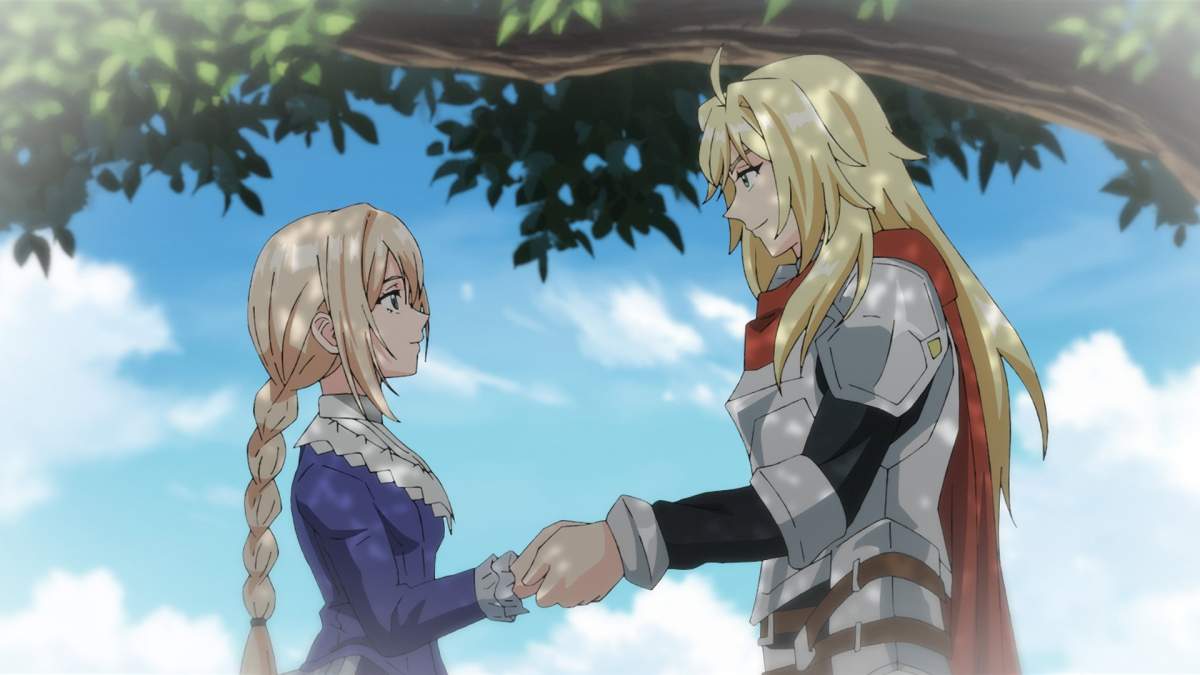
Romelia War Chronicle Episode 2 takes the story in a new direction as Romelia begins working toward a goal that goes far beyond proving her former fiancé wrong. After defeating the Demon King alongside Prince Henri and his companions, she expected to move forward with her life. Instead, Henri breaks off their engagement, leaving Romelia to return to a homeland struggling with the consequences of war. Her achievements are ignored, and the people around her fail to recognize the skills that could help rebuild the kingdom.
Episode 2, titled “Fortress Takeover,” shifts the focus from Romelia’s personal rejection to the difficult work waiting ahead. She moves to an isolated fortress in the countryside and begins putting her plans into action. The challenge is no longer simply about surviving humiliation or earning recognition. Romelia must find a practical way to confront the remaining threats, organize people, and turn her determination into meaningful results.
What makes this episode interesting is its emphasis on preparation, strategy, and leadership rather than straightforward action. Romelia does not have to become the strongest warrior in the kingdom to make a difference. Instead, she must demonstrate that careful planning and intelligent decision-making can be just as important as magical abilities and physical strength. The episode establishes a new stage in her journey and suggests that rebuilding a kingdom may prove more complicated than defeating a single powerful enemy.
Romelia’s Journey Continues After Her Rejection
The first episode established the emotional foundation of Romelia’s story. She helped defeat the Demon King, yet Prince Henri decided that she no longer had a place beside him. His decision exposed the difference between Romelia’s actual contributions and the way others judged her abilities.
You May Also Like



Episode 2 builds on that conflict without allowing it to define everything Romelia does. Her rejection remains an important part of her circumstances, but she cannot spend her future waiting for Henri to reconsider his decision. The kingdom has suffered too much damage, and the remaining problems require attention.
Romelia’s decision to move forward demonstrates that she is prepared to take responsibility for her own future. She does not need the approval of the prince to begin making plans, nor does she have to depend on the group that previously accompanied her. Her journey becomes more independent as she starts concentrating on what she can accomplish with the resources available to her.
This development gives the character a stronger sense of direction. Rather than allowing the previous episode’s betrayal to become the entire story, the anime begins exploring the practical consequences of Romelia choosing a different path.
The Isolated Fortress Becomes the Center of the Story
The major development in Episode 2 is Romelia’s move to an isolated fortress in the countryside. This location provides a new setting for her plans and changes the scale of the story.
A fortress is more than a dramatic backdrop in a fantasy war narrative. It can serve as a defensive position, a base for organizing personnel, and a starting point for operations against hostile forces. However, a fortress also creates responsibilities. It needs people who can protect it, supplies to sustain them, and leadership capable of responding to unexpected problems.
For Romelia, the location represents an opportunity to turn her ideas into action. She is no longer dealing only with personal disappointment or the political consequences of her broken engagement. She must now consider the practical details involved in establishing a position from which she can address the dangers facing the surrounding region.
The isolated setting also reinforces the difficulties of her situation. Without dependable support, even a strategically valuable location can become a burden. Romelia needs to make careful decisions about what to prioritize and how to use the resources available to her.
The fortress therefore introduces a challenge that fits the series’ central theme: success depends on more than possessing power. It also depends on understanding the situation and using limited resources effectively.
A New Challenge Tests Romelia’s Leadership
Romelia’s next challenge is not simply a test of courage. It is a test of leadership.
Defeating a powerful enemy and organizing a group of people are two very different responsibilities. In battle, an individual might survive through quick reactions, determination, or specialized abilities. Leadership requires a broader understanding of the situation. A commander must consider the strengths and weaknesses of others, communicate objectives, and prepare for consequences that may not become obvious until much later.
Episode 2 places Romelia in a position where these skills become increasingly important. Her plans require more than personal determination because she cannot accomplish every task alone. She needs a structure that allows other people to contribute, even when their abilities and experience differ from her own.
This creates an interesting challenge for the protagonist. Romelia must establish authority without assuming that people will automatically trust her. She also needs to demonstrate that her decisions have a purpose and that her strategy can produce practical results.
Her leadership journey is especially important because the people who previously dismissed her focused heavily on her lack of conventional combat strength. The new situation gives her an opportunity to demonstrate a different kind of competence. The episode’s central question becomes whether Romelia can transform her intelligence and determination into a functioning plan that other people can follow.
Why the Demon King’s Defeat Did Not End the War
One of the strongest ideas behind Romelia War Chronicle is that defeating the main villain does not automatically repair the damage caused by a conflict.
Many fantasy stories treat the defeat of the Demon King as the conclusion of the central crisis. Once the most powerful enemy falls, the heroes celebrate, the kingdom becomes peaceful, and the narrative moves toward a happy ending. Romelia’s story takes a more complicated approach.
The Demon King’s defeat may represent an important military victory, but the kingdom still has damaged communities, frightened people, weakened resources, and threats that cannot be ignored. The consequences of war remain even after the most visible enemy disappears.
Episode 2 continues exploring this distinction by shifting attention toward the work that follows victory. Romelia must think about security, organization, and the practical steps necessary to restore stability. These problems do not disappear simply because the royal court can celebrate a successful campaign.
This perspective makes the series more grounded than a conventional power fantasy. It suggests that winning a battle and creating lasting peace are separate achievements. One requires defeating an opponent; the other requires sustained effort, planning, and cooperation.
Romelia’s mission is therefore not merely about finding another enemy to defeat. It is about addressing the conditions that allow danger and instability to continue.
Romelia’s Intelligence Becomes Her Greatest Strength
Romelia does not fit the usual image of a fantasy hero whose greatest advantage is overwhelming physical power. Her value lies in skills that other characters may underestimate, including negotiation, financial understanding, trade, and gathering information.
These abilities become particularly useful when the challenge involves organizing people and making a plan work under difficult circumstances. Strength can help someone win an individual confrontation, but it cannot automatically provide food, improve communication, or make an inexperienced group function effectively.
Romelia’s approach suggests that intelligence becomes most valuable when it is applied to concrete problems. A clever idea means little unless it can be turned into a realistic course of action. She must recognize the obstacles in front of her and determine which steps offer the greatest chance of success.
This makes her different from protagonists who solve nearly every problem by unlocking a stronger ability. Romelia’s progress depends on understanding situations, evaluating available options, and making decisions that account for more than immediate results.
Episode 2 helps establish why these qualities matter to her larger mission. The fortress gives her a setting in which organization and planning can have visible consequences. If she succeeds, it will be because she understands how to make limited resources useful rather than because she suddenly becomes invincible.
The Importance of Inexperienced Recruits
A major difficulty associated with Romelia’s mission is the challenge of working with recruits who lack experience. This detail adds another layer to her responsibilities and makes the task of building an effective force more complicated.
An inexperienced group cannot be expected to perform like a trained military unit. Its members may lack confidence, coordination, discipline, or a clear understanding of what their duties require. Even when individuals are willing to help, enthusiasm alone does not guarantee success. Romelia must therefore consider how a group can develop into something more effective. That means recognizing the abilities people already possess while identifying the areas in which they need guidance. It also means understanding that expectations must match the group’s actual capabilities.
This challenge provides an opportunity for the anime to explore military organization from a perspective that differs from conventional battle-focused storytelling. Instead of concentrating entirely on the strongest fighter, the story can examine how an effective force is created.
The situation also increases the pressure on Romelia. If she expects too much from inexperienced people, her plans could fail. If she underestimates them, she may waste valuable potential. Finding the right balance becomes part of her responsibility as a leader. Her success will depend on whether she can turn an imperfect starting point into a workable foundation.
Building an Army Requires More Than Numbers
Romelia’s larger goal involves building a force capable of helping protect the kingdom. However, an army is not effective simply because it contains a large number of people.
A functional military organization needs structure, communication, supplies, and a clear purpose. Soldiers must understand what they are expected to do, and commanders must know how to coordinate their efforts. Without these foundations, even a large force can struggle against a smaller but better-organized opponent.
Episode 2 introduces the early stages of this problem through Romelia’s attempt to put her plans into practice. The fortress provides a base, but a base alone cannot guarantee security. Its usefulness depends on the people who operate from it and the decisions that shape their activities.
This is where Romelia’s approach becomes particularly relevant. She must consider how different responsibilities fit together and how the available resources can support her objectives. Military preparation becomes a process of solving connected problems rather than a simple matter of recruiting fighters.
The series has the potential to make these organizational challenges as compelling as its direct confrontations. Every improvement in training, coordination, or planning can affect the outcome of a later conflict. For Romelia, building an army is therefore not just a display of ambition. It is a demanding project that requires patience and a realistic understanding of what success involves.
The Political Consequences of Romelia’s Independence
Romelia’s decision to move forward independently also carries political implications. Her broken engagement was not simply a private disagreement between two people. Prince Henri’s position and public reputation give his decision consequences beyond their personal relationship.
When a noblewoman who has been dismissed begins developing her own plans, the people around her may have different reactions. Some might view her efforts as useful, while others could question her authority or worry about what her growing independence means. Episode 2 does not need to resolve these larger tensions immediately. Instead, the shift toward Romelia’s own mission creates the conditions for future conflicts involving influence, responsibility, and competing interests.
Her position is particularly complicated because the kingdom needs practical solutions, yet social status and conventional ideas about strength may influence whose judgment is taken seriously. Romelia must work within that environment while demonstrating that her abilities have real value.
This political dimension adds depth to the fantasy setting. The greatest obstacles may not always be monsters or enemies on a battlefield. They can also arise from people who misunderstand her objectives, refuse to cooperate, or prioritize their own interests over the wider needs of the kingdom. Romelia’s growing independence may eventually force these competing attitudes into direct conflict.
A Different Kind of Fantasy Protagonist
Romelia stands out because her story does not depend entirely on becoming the most powerful person in the room. Her challenge is to prove that leadership, strategy, and practical knowledge can change the outcome of situations that initially appear hopeless.
This approach offers a refreshing alternative to fantasy narratives built around increasingly powerful abilities. In many series, a protagonist overcomes rejection by discovering a hidden power or defeating every opponent who underestimated them. Romelia’s journey is more concerned with what she can accomplish through planning and organization.
That does not mean action and combat are unimportant. The setting still contains dangerous enemies and military threats. Instead, the story broadens the definition of strength by showing that battles depend on decisions made long before the fighting begins.
Episode 2 supports this direction by placing Romelia in a situation where her ability to organize and lead matters. She cannot simply rely on the reputation of having helped defeat the Demon King. She needs to build something that can function without depending entirely on her personal achievements. This makes her progress more interesting because every step forward has to be earned. Her plans must respond to real limitations, and her decisions must produce results if she hopes to gain lasting influence.
What Episode 2 Does Well
One of the episode’s most important strengths is its change in focus. The premiere established Romelia’s rejection and the circumstances that forced her to reconsider her future. Episode 2 begins moving beyond that setup and toward the larger project that will define her journey.
The fortress provides a clear setting for this transition. It gives Romelia a place from which to begin implementing her ideas and introduces practical obstacles that can develop across future episodes. The emphasis on leadership also helps distinguish the series from fantasy stories that focus almost exclusively on individual combat. Romelia’s challenges involve people, organization, and the difficult process of turning intentions into results.
Another strength is the connection between the personal and political sides of the story. Romelia has been dismissed by someone who judged her usefulness according to conventional standards. Her new responsibilities allow the narrative to explore what happens when she applies her overlooked abilities to problems that cannot be solved by strength alone.
The episode’s effectiveness ultimately depends on how well the series balances this strategic material with character development and dramatic tension. Viewers who enjoy fantasy stories involving military planning and political consequences may find this direction particularly appealing. Rather than treating the protagonist’s rejection as the end of her story, the episode uses it as the starting point for a more ambitious journey.
What Could Happen Next?
Episode 2 establishes several possibilities for the next stage of Romelia’s adventure, although the precise outcome of her plans remains something future episodes will need to reveal. One important question concerns the fortress itself. Romelia’s decision to use the location as a base creates an immediate need to make it useful and secure. How she approaches those responsibilities could help determine the direction of her larger mission.
Another question concerns the people working under her leadership. Inexperienced recruits may become an important part of her plans, but their development will require time and organization. Their progress could also reveal different aspects of Romelia’s personality, especially her ability to communicate expectations and respond when things do not go according to plan.
The remaining demonic threats also provide a reason for continued action. The kingdom cannot assume that peace has been secured simply because the Demon King has been defeated. Romelia’s efforts may eventually bring her into situations where preparation and practical judgment are tested under greater pressure. Finally, the political consequences of her independence could become increasingly important. As her plans develop, other characters may have to reconsider their assumptions about her abilities.
These are possibilities suggested by the story’s direction rather than confirmed outcomes. What matters most is that Episode 2 gives Romelia a clear objective and establishes several challenges capable of carrying the narrative forward. Romelia War Chronicle Episode 2: “Fortress Takeover” moves the anime beyond the emotional fallout of Romelia’s broken engagement and begins establishing the practical challenges at the center of her journey.
The move to an isolated fortress gives her a new starting point, while the demands of organizing people and preparing for further threats create a more complicated test than simply defeating a powerful enemy. Romelia must demonstrate that her intelligence and leadership can make a difference in a kingdom still suffering from war. The episode’s central idea is straightforward but effective: victory does not automatically create peace, and being underestimated does not mean someone lacks the ability to lead. Romelia’s next chapter will depend on how she applies her skills to problems that require patience, planning, and cooperation.
For viewers interested in fantasy anime with strategic thinking, military organization, and a protagonist who relies on more than conventional power, this episode establishes an appealing direction. Its most interesting promise is not that Romelia will defeat every obstacle easily, but that she will have to find ways to overcome limitations that other people might consider impossible. As the story continues, her greatest achievement may be proving that rebuilding a kingdom requires a different kind of hero—one who can look beyond the battlefield and understand what must happen after the fighting ends.
Overall, Episode 2 lays the groundwork for Romelia’s independent mission and gives the series a clearer identity. The real challenge ahead is whether she can turn her plans into lasting change while facing the military and political problems that remain after the Demon King’s defeat.
Related – Dragon Ball Super: Beerus Episode 1 Recap: Why Is Beerus Searching for Goku?