
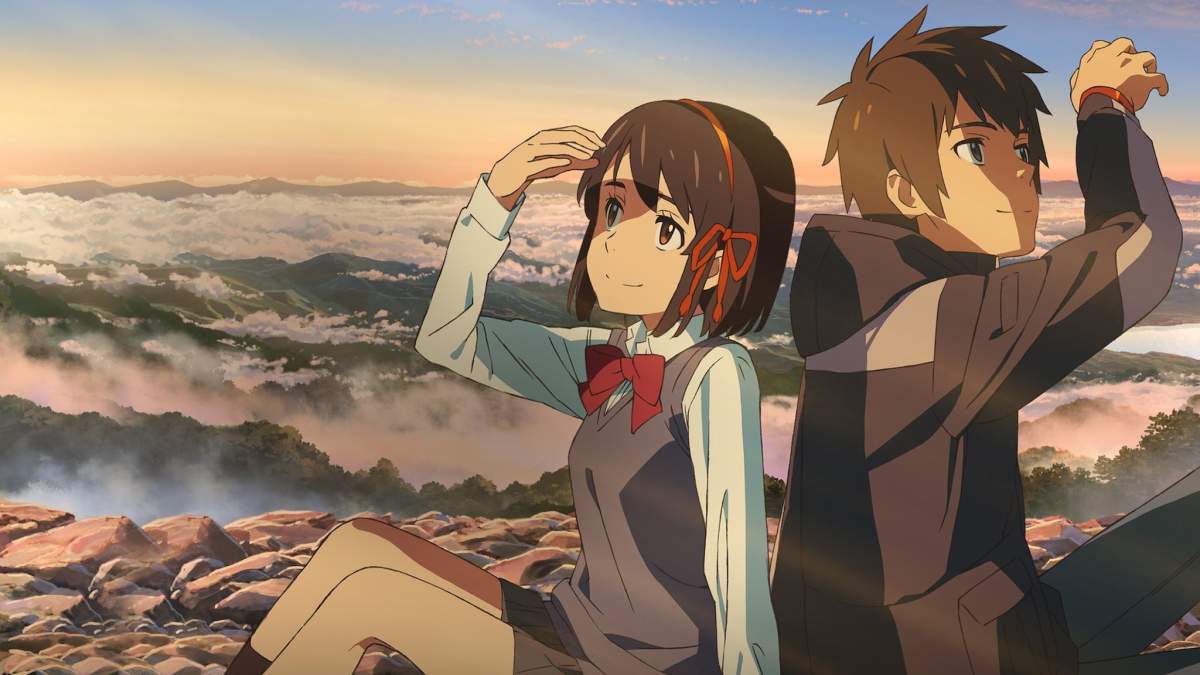
Your Name (2016) is one of the most memorable Japanese animated movies of the modern era, combining romance, fantasy, time travel, and emotional storytelling into a story that continues to fascinate anime fans worldwide. Directed by Makoto Shinkai, the film follows two teenagers, Taki Tachibana and Mitsuha Miyamizu, who mysteriously begin switching bodies despite living completely different lives. What initially seems like a strange supernatural experience gradually develops into a much larger mystery involving memory, destiny, and the connection between two people who have never properly met.
For viewers in the United States, Your Name, also known by its Japanese title Kimi no Na wa, remains a popular choice for fans of romantic anime movies. Its beautiful animation, memorable soundtrack, relatable characters, and unusual narrative structure make it more than a conventional love story. The movie explores how people can influence each other’s lives even when they do not fully understand their connection.
One of the biggest questions audiences ask after watching the film is whether Taki and Mitsuha actually meet again. Their journey involves a mysterious time difference, a devastating disaster, and memories that gradually disappear. Understanding the movie’s conclusion requires looking closely at how the body-switching phenomenon works, why the characters forget each other, and what the final encounter represents.
Your Name (2016): Movie Details, Story, and Cast
Your Name is a Japanese animated romantic fantasy film written and directed by Makoto Shinkai and produced by CoMix Wave Films. Released in Japan on August 26, 2016, the movie became an international success thanks to its distinctive visual style, emotional storytelling, and inventive combination of supernatural mystery and teenage romance. Its original Japanese title, Kimi no Na wa, translates to Your Name, reflecting the importance of identity and memory throughout the story.
You May Also Like

Chainsaw Man – The Movie: Reze Arc (2025) Ending Explained: Does Reze Die?
Doraemon: New Nobita and the Castle of the Undersea Devil (2026) Ending Explained: Does Buggy Save the World?

Revue Starlight: The Movie (2021) Ending Explained: Does Karen Reunite With Hikari and Choose Her Own Future?

Demon Slayer: Infinity Castle (2025) Ending Explained: Does Tanjiro Defeat Akaza and Find Muzan?
The film runs for approximately 106 minutes and features music by the Japanese rock band RADWIMPS. Its soundtrack combines energetic songs with atmospheric instrumental compositions that support the movie’s changing moods. The music plays an important role in creating the contrast between Mitsuha’s peaceful rural surroundings and Taki’s busy life in Tokyo. The film’s detailed backgrounds, expressive animation, and carefully composed landscapes also contribute to its distinctive atmosphere.

The Japanese voice cast features Ryunosuke Kamiki as Taki Tachibana and Mone Kamishiraishi as Mitsuha Miyamizu. Supporting characters include Masami Nagasawa as Miki Okudera, Etsuko Ichihara as Hitoha Miyamizu, Ryo Narita as Katsuhiko Teshigawara, and Aoi Yuki as Sayaka Natori. For English-speaking audiences, the English-language dub features Michael Sinterniklaas as Taki and Stephanie Sheh as Mitsuha.
The story begins when Taki, a high school student living in Tokyo, and Mitsuha, a teenage girl living in the rural town of Itomori, start experiencing strange dreams. During these experiences, they find themselves living in each other’s bodies. Their mysterious connection leads to funny misunderstandings, unexpected friendships, and a growing desire to understand why the phenomenon is happening.
However, Your Name gradually moves beyond its initial body-switching premise. As Taki and Mitsuha investigate their connection, they discover that time itself plays a crucial role in their relationship. The result is a romantic fantasy that balances youthful comedy with suspense, tragedy, and an unforgettable conclusion.
How Taki and Mitsuha’s Body-Switching Connection Begins
The central mystery of Your Name begins when Taki and Mitsuha wake up in unfamiliar bodies. Taki suddenly finds himself living Mitsuha’s life in Itomori, while Mitsuha experiences Taki’s daily routine in Tokyo. Neither character understands what is happening, and their initial reactions range from confusion to embarrassment as they struggle to navigate each other’s surroundings.
Their personalities and lifestyles make the situation particularly entertaining. Taki is accustomed to the fast-paced environment of Tokyo, where he attends school, works part-time at an Italian restaurant, and spends time with his friends. Mitsuha lives in a small rural community where local traditions and family expectations influence her everyday life. Experiencing these contrasting environments allows both characters to discover aspects of life they had never considered before.
To manage the strange phenomenon, they begin leaving messages for each other through written notes and smartphone entries. These instructions help them avoid embarrassing situations and explain what happened during their time in the other person’s body. Gradually, they develop an unusual form of communication, even though they are not meeting face-to-face.
The body-switching experiences also begin changing their lives. Mitsuha helps Taki improve his relationships and social confidence, while Taki influences Mitsuha’s reputation and interactions with people in Itomori. Their actions create consequences that extend beyond their individual experiences, making it clear that their connection is affecting both of their worlds.
At first, the body-switching seems like a supernatural comedy about two teenagers learning to live as each other. However, small inconsistencies begin to suggest that something more complicated is happening. The switching eventually stops, leaving Taki worried about Mitsuha and determined to discover the truth about the girl whose life has become so important to him.
Why Taki and Mitsuha Want to Find Each Other
As their connection develops, Taki and Mitsuha become increasingly interested in understanding who the other person really is. Although they initially treat the body-switching as an inconvenience, their experiences create a meaningful emotional bond. Each has gained an intimate understanding of the other’s daily struggles, friendships, family relationships, and personal ambitions.
Mitsuha’s life in Itomori is shaped by her responsibilities as a member of a family associated with local Shinto traditions. She sometimes feels embarrassed by the expectations placed upon her and dreams of escaping her small town to experience life in Tokyo. Through her time in Taki’s body, she gets a glimpse of the independence and excitement she desires.
Taki, meanwhile, learns more about the world outside his immediate surroundings through Mitsuha’s experiences. His life in Tokyo is busy and full of opportunities, but he has not previously developed a connection with someone who understands him in such an unusual way. The body-switching gives him a reason to think about another person’s happiness and experiences.

Their connection becomes more emotional as they realize that they miss each other when the switching stops. Taki attempts to contact Mitsuha, but his efforts fail because the relationship is not operating according to the normal rules of time. This discovery transforms his curiosity into a determined search for answers.
Taki’s desire to find Mitsuha is especially important because he does not fully understand why she matters so much to him. He remembers her presence in his life but struggles to explain their connection. Rather than accepting the disappearance of the body-switching as the end of an unusual experience, he begins searching for the person who has become central to his thoughts.
This emotional motivation drives the movie into its more serious second half. What begins as a strange connection between strangers becomes a journey to recover something precious before it disappears completely.
The Biggest Twist: Taki and Mitsuha Are Living in Different Years
One of the most important revelations in Your Name is that Taki and Mitsuha are not experiencing their lives at the same time. Although they initially believe that the body-switching allows them to share ordinary days, their connection actually crosses a three-year time gap. Mitsuha’s experiences take place in 2013, while Taki’s life takes place in 2016.
This difference explains why Taki cannot simply visit Mitsuha after the switching ends. When he searches for Itomori, he discovers that the town was struck by a comet disaster three years earlier. The event destroyed much of the town and claimed the lives of many residents, including Mitsuha, according to the historical records Taki finds.
The revelation changes the meaning of the earlier scenes. Taki and Mitsuha were not exchanging bodies during the same calendar days. Instead, their connection allowed them to experience each other’s lives across different points in time. Their messages and memories had created the impression of an ordinary relationship, even though their timelines were separated by a tragedy that Taki initially knew nothing about.
This twist also explains why their attempts to communicate directly fail. Taki cannot find Mitsuha through ordinary means because the girl he remembers belongs to a period before the comet disaster. The person he is searching for is not simply living somewhere else; she is living in a different time.
The time difference gives the film’s romance a tragic dimension. Taki and Mitsuha develop genuine feelings for each other without realizing that their connection is threatened by events neither fully understands. Once Taki discovers the truth, his search becomes a race against time.
Rather than abandoning hope, Taki tries to find a way to reach Mitsuha in the past. His decision establishes the central question of the movie’s final act: can the connection between two people overcome a disaster that has already taken place?
What Is the Meaning of the Comet in Your Name?
The comet is one of the most important elements in Your Name, functioning as both a beautiful astronomical event and the source of the tragedy surrounding Itomori. Early in the movie, the comet is presented as something extraordinary that people are excited to observe. Its appearance gives the story a sense of wonder, connecting the characters’ personal lives to a larger event unfolding in the sky.
However, the comet eventually becomes associated with destruction. A fragment breaks away and crashes into Itomori, devastating the town and killing many residents. The disaster is the reason Mitsuha’s timeline is so different from Taki’s, and it establishes the stakes behind his determination to find her.
The comet also reinforces the movie’s interest in fate and uncertainty. People can admire a beautiful event without knowing the danger it might bring, just as Taki and Mitsuha initially experience their connection without understanding its consequences. Their lives are influenced by forces that appear mysterious or beyond their control.

For Mitsuha, the comet is connected to the history and future of her hometown. For Taki, learning about the disaster is a shocking discovery that makes his memories of Mitsuha seem impossible. The same celestial event means something different to each character because they experience it from separate points in time.
The disaster also transforms Taki’s goal. He is no longer searching only because he wants to meet someone he remembers. He is trying to save a person whose life has already been recorded as lost. His determination reflects the movie’s belief that emotional connections can inspire people to challenge circumstances they once accepted as unchangeable.
Ultimately, the comet provides the central conflict that brings the romantic and supernatural elements together. It makes the characters’ connection meaningful not only because they want to find each other, but because their actions could change the future of an entire community.
How Taki Tries to Save Mitsuha and Itomori
After discovering the truth about the comet disaster, Taki refuses to accept that Mitsuha’s fate is already decided. He realizes that their unusual connection may offer a way to reach her in the past, even if he cannot communicate with her through ordinary means. His search eventually leads him to the sacred location associated with Mitsuha’s family traditions.
The location, known as the kuchikamizake shrine setting, has a spiritual connection to the Miyamizu family and the film’s exploration of time. Mitsuha’s ritual offering becomes important because it represents a link between the living, the past, and the traditions passed down through generations. By visiting the shrine, Taki hopes to strengthen his connection with Mitsuha.
The sequence is one of the film’s most atmospheric moments. Taki travels through a landscape that feels removed from everyday life, reflecting his willingness to leave behind the familiar world of Tokyo in search of someone he cannot explain. His journey also emphasizes how much Mitsuha has come to matter to him, even though his memories of their relationship remain incomplete.
When Taki drinks the kuchikamizake associated with Mitsuha, he reconnects with her through the supernatural mechanism that has linked them. The experience allows him to return to her body in the past, giving him an opportunity to act before the comet disaster occurs.
However, simply reaching Mitsuha is not enough. She and the people of Itomori must be persuaded to respond to a threat that many of them do not fully understand. Taki’s plan depends on Mitsuha’s willingness to act, as well as the cooperation of her friends and the people who can help evacuate the town.
The stakes are now clear. Taki must help Mitsuha prevent the tragedy while the two characters struggle with a connection that is becoming increasingly difficult to maintain. Their relationship is no longer only about finding each other; it has become a chance to change the outcome of a disaster.
How Mitsuha Helps Change Itomori’s Future
Mitsuha becomes an essential part of the effort to save Itomori because she is the person who can influence events in the town before the comet strikes. With Taki’s help, she begins to understand the seriousness of the danger and realizes that she must convince others to take action.
The plan involves getting people away from the area threatened by the disaster. Mitsuha relies on her friends, including Katsuhiko Teshigawara and Sayaka Natori, to help carry out the evacuation effort. Their involvement adds another important dimension to the story: preventing the disaster requires more than a supernatural connection between two people. It requires teamwork, trust, and the willingness to act under pressure.
Mitsuha also faces resistance because the plan sounds extraordinary and difficult to explain. Convincing people to leave their homes and abandon their normal routines is not easy, especially when they do not fully understand the threat. Her determination, however, is strengthened by the knowledge that something terrible is about to happen.

Taki’s influence gives Mitsuha the emotional motivation to pursue the plan, but she must ultimately make her own decisions. The movie does not portray her simply as someone waiting to be rescued. Instead, she becomes an active participant in changing the future of her community.
This development also strengthens the film’s central themes of connection and responsibility. Taki and Mitsuha may have been brought together through a mysterious phenomenon, but their actions matter because they choose to help each other. Their bond creates an opportunity, while their courage and cooperation make it possible to use that opportunity.
The effort to save Itomori also provides an emotional contrast with the earlier body-switching scenes. What began as a strange experience filled with confusion and comedy becomes a serious struggle in which the characters must trust each other without having all the answers.
Why Taki and Mitsuha Forget Each Other
One of the most heartbreaking aspects of Your Name is that Taki and Mitsuha gradually lose their memories of their extraordinary connection. Even after their experiences bring them together across time and give them an opportunity to change the future, they cannot preserve every detail of what happened.
The film links this loss of memory to the supernatural nature of their connection and the shifting timelines in which they live. As the characters move away from the moments when their lives overlap, the details of their experiences begin to disappear. Their memories become difficult to hold onto, even though the emotional impact remains.
The loss is particularly painful because their relationship is built on experiences that cannot easily be explained to other people. They have shared each other’s lives, influenced one another’s decisions, and developed feelings without the usual process of meeting and spending time together in the same place. When those memories fade, neither character has a complete explanation for the emotional connection that remains.
Their attempts to preserve the relationship through written messages also become increasingly fragile. Names, details, and memories that once helped them understand each other begin slipping away. The more they struggle to hold on, the more difficult it becomes to explain exactly what they are trying to remember.
However, the film suggests that forgetting does not necessarily erase the meaning of their relationship. Taki and Mitsuha continue to feel that something important is missing from their lives. Their longing persists even when the specific details of their connection are no longer available to them.
This is one of the movie’s most powerful ideas: people may lose the exact memories of an experience while still carrying its emotional influence. Taki and Mitsuha cannot fully explain why they are searching for someone, but their desire to find each other survives.
That unresolved feeling becomes essential to the final scene, where the characters encounter one another again despite having forgotten so much of what brought them together.
Your Name Ending Explained: Do Taki and Mitsuha Meet Again?
Yes, Taki and Mitsuha meet again at the end of Your Name. After the events surrounding the comet disaster and their mysterious connection across time, the two characters eventually find themselves living their own lives without clear memories of their experiences together. Although they no longer remember the details of the body-switching or the relationship that developed through it, they continue to feel that someone important is missing.
The ending moves forward in time, showing Taki and Mitsuha as young adults navigating their separate lives in Tokyo. They have grown older, and the supernatural events that once connected them are no longer part of their conscious memories. Nevertheless, the film suggests that their emotional connection has not disappeared completely.
Their paths eventually cross in the city. They notice each other while traveling through Tokyo, and the encounter creates a feeling of recognition that neither can immediately explain. Taki and Mitsuha do not instantly recover all their memories, nor do they understand exactly why the stranger before them feels so significant. Instead, they are drawn toward each other by an emotional familiarity that has survived the passage of time.

The sequence builds gradually as they attempt to locate one another again. They spot each other from separate trains and later encounter one another on stairways. These repeated near-meetings create suspense because the audience understands the importance of their connection, even though the characters themselves cannot fully explain it.
Eventually, Taki and Mitsuha stop and turn toward each other. Rather than allowing the opportunity to pass, they finally speak. The movie’s emotional payoff comes from the fact that they have found each other again despite the loss of their memories and the many circumstances that once kept them apart.
Their reunion does not provide a detailed explanation of what happens next. Instead, it offers the possibility of a new beginning. They can now introduce themselves, discover who the other person is, and build a relationship in the same timeline.
For viewers wondering whether the movie has a happy ending, the answer is yes, in an understated and open-ended way. Taki and Mitsuha meet again, and the film strongly suggests that they will have the opportunity to form the connection they have been searching for throughout the story.
What Does the Final “Your Name” Question Mean?
The final exchange between Taki and Mitsuha gives the movie its emotional resolution. After years of separation, altered timelines, and fading memories, they finally stop and acknowledge each other. The simple question about the other person’s name is powerful because it captures everything they have lost and everything they may now gain.
Throughout the movie, names function as symbols of identity and connection. Taki and Mitsuha spend much of the story trying to understand who the other person is, where they live, and why their lives have become intertwined. They leave messages to preserve details that would otherwise disappear, and their growing connection makes those details increasingly important.
By the end, they have forgotten many of the events that brought them together. They cannot explain their shared experiences or recall every moment that once made their relationship feel real. Yet the emotional pull between them remains strong enough to bring them to the same place.
Asking each other’s names is therefore more than a polite introduction. It represents a chance to begin again without relying on memories that have been lost. Instead of trying to recover the exact relationship they once had, they can create a new one based on the people they have become.
The question also connects directly to the title. Your Name is not simply about discovering the identity of a mysterious stranger. It is about the desire to preserve a connection when time, distance, and memory threaten to erase it. Taki and Mitsuha’s search for each other becomes a search for the missing part of their lives that they cannot clearly describe.
The final moment leaves the audience with hope rather than a complete explanation. The characters do not immediately remember everything, and the movie does not show their future relationship in detail. However, their decision to speak to each other suggests that the emotional journey has brought them to the beginning of something new.
The ending is satisfying precisely because it allows their connection to survive without requiring every mystery to be solved.
Is Your Name a Happy Ending or a Sad Ending?
The ending of Your Name combines sadness and hope, making it more emotionally complex than a conventional romantic conclusion. Taki and Mitsuha spend much of the story separated by time, and their attempts to find each other are repeatedly complicated by memory loss and circumstances beyond their control. Even when they successfully influence the future of Itomori, they cannot preserve every detail of their connection.
The sad element comes from the sacrifices and uncertainty involved in their journey. The characters lose their memories of important experiences, and they must continue living without understanding why they feel that something is missing. Their relationship seems almost impossible to explain because the events that created it are no longer accessible to them.
However, the movie does not end with permanent separation. Taki and Mitsuha eventually meet again, giving them a chance to build a relationship without the supernatural obstacles that once defined their lives. The final encounter does not promise that everything will be perfect, but it offers a meaningful possibility of happiness.
This balance is part of what makes the movie so memorable for anime fans. It acknowledges that important experiences can change people even when they cannot remember every detail. Taki and Mitsuha do not need to recover their entire past to recognize that they want to connect with each other.
The conclusion also reinforces the movie’s broader message about fate and personal choice. Their connection may have begun through circumstances neither understood, but the final meeting allows them to take a step toward each other voluntarily. They are no longer simply experiencing a mysterious phenomenon; they are two people who have the opportunity to decide what happens next.
For audiences who prefer definitive endings, the film may leave some questions unanswered. It does not show a wedding, a long conversation explaining their past, or a detailed account of their future together. Instead, it ends at the moment when a new relationship becomes possible.
That is why Your Name can be considered a hopeful, emotionally satisfying ending. The characters have not recovered everything they lost, but they have found each other again, which is the central goal of their journey.
Final: What Your Name’s Ending Really Means
The ending of Your Name brings together the movie’s central ideas about memory, time, identity, and human connection. Taki and Mitsuha begin as strangers whose lives become mysteriously intertwined through body-switching. Their experiences gradually reveal a much larger mystery involving different timelines, the comet disaster, and the possibility of changing the future.
When Taki discovers that Mitsuha lived three years before him and was believed to have died in the destruction of Itomori, he refuses to accept that their connection must end. His determination helps create an opportunity for Mitsuha and her friends to prevent the tragedy, changing the course of events and allowing the story to move toward a more hopeful conclusion.
However, the characters pay an emotional price. Their memories fade, leaving them unable to explain the relationship that once shaped their lives. Even so, their feelings persist in a form they cannot fully understand. They continue searching for someone important without knowing exactly who they are looking for.
Do Taki and Mitsuha meet again? Yes. The final scenes show them encountering each other as young adults in Tokyo. Although they do not immediately remember their shared past, they recognize the importance of the moment and finally speak to one another. Their reunion suggests that they can begin a relationship in the present, free from the extraordinary circumstances that once separated them.
The title Your Name gains its full meaning through this final encounter. Taki and Mitsuha have spent the story trying to preserve each other’s identities against the effects of time and memory. By asking each other’s names, they take the first step toward rediscovering one another and creating a future together.
For American viewers searching for a clear explanation of the movie’s ending, the most important takeaway is that Your Name does not conclude with Taki and Mitsuha remaining permanently separated. It ends with a reunion that offers hope while preserving some mystery about their future.
Ultimately, the film suggests that a connection can remain meaningful even when its memories disappear. Taki and Mitsuha may not remember everything that brought them together, but their desire to find each other survives. Their final meeting transforms a story about impossible separation into one about second chances, making Your Name an enduring favorite among fans of romantic anime and emotional fantasy films.